
| ||
| ||
|
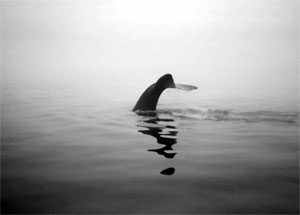
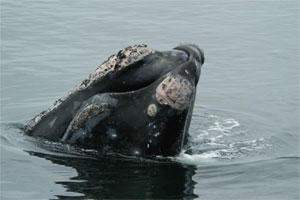
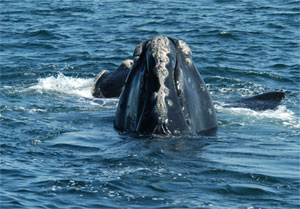
It鈥檚 called the 鈥渁rea to be avoided鈥� 鈥� 1,000 square nautical miles located in the Roseway Basin region of the Scotian Shelf, just south of Barrington, N.S. And since June 1, ships have been asked to make a detour around the area, a crucial habitat for the endangered North Atlantic right whale.
There may be only 350 these right whales left in the Atlantic Ocean. Without measures to protect and grow their numbers, they could be extinct by 2020.
鈥淚n the first four days (since implementation of new policy), we鈥檝e seen evidence of vessels complying,鈥� says Angelia Vanderlaan, a PhD candidate studying biological oceanography at 9 1免费版下. 鈥淪ince this is new and it is a voluntary measure, I鈥檓 hoping it will work.鈥�
And she鈥檚 got her eye on just who is and who isn鈥檛 complying. Ships transmit information about their whereabouts, speed, direction, and length and type of ship every three seconds鈥斺�淚t鈥檚 like, 鈥榟ere I am!鈥� 鈥楬ere I am!鈥欌�� says Ms. Vanderlaan. This data is picked up specialized equipment installed on cell towers near Cape Sable Island. Back in her office at 9 1免费版下, Ms. Vanderlaan can track those ships and their movements on her computer.
On June 1st, for example, about 20 vessels traveled through the Roseway region, a thoroughfare for ships from Halifax to New York. Sixteen of those ships avoided the area, and another four could have, but didn鈥檛 and plowed right on through. On June 3 and June 4, tracking reveals some vessels clearly modified their routes to avoid.
鈥淚t鈥檚 early on, but some seem to be going around,鈥� she says. 鈥淲e think it will make a big difference; it certainly helped when the shipping lanes were shifted in the Bay of Fundy.鈥�
The monitoring is possible because of collaboration between Aliant and the 9 1免费版下 researchers led by oceanography professor Christopher Taggart.
鈥淲hen Chris approached Aliant, there was no question, we wanted to be a part of it,鈥� says Alyson Queen, public affairs manager for Aliant. 鈥淚t鈥檚 an excellent example of how business and academia can combine forces for the betterment of the environment.鈥�
 |
| Roseway Basin聽(Fisheries and Oceans Canada) |
Aliant has also installed the receivers on towers near Halifax and in Glace Bay, Cape Breton, with additional sites being considered near Caraquet, N.B. and Digby, N.S.
Hunted to the brink of extinction during the last century, the right whale continues to be under threat by mankind. (Whalers called the right whale 鈥� the 鈥渞ight鈥� whale to kill because they were relatively easy to pursue and their thick layer of valuable blubber kept the dead whale conveniently afloat.) But now the greatest threat it faces is being struck and killed by a ship. The faster the ship is traveling, the more likely the whale will die.
So why don鈥檛 the whales get out of the way? Ms. Vanderlaan says while the whales likely hear ship traffic, they鈥檙e so used to the noise it doesn鈥檛 serve as a warning. At one time, for example, researchers experimented by broadcasting alerts to the whales, but instead of scaring them away, it brought them to the surface where there was a greater likelihood of a collision. A collision with a ship鈥檚 propellers can shear off a whale鈥檚 tail, slice them apart, or cause huge contusions.
鈥淚t鈥檚 like living beside a train track,鈥� she says. 鈥淎fter awhile, you stop hearing the trains go by.鈥�
Ms. Vanderlaan says changes they鈥檝e proposed have been supported and indeed embraced by Canadian companies, such as Irving Oil. But the same is not true in the United States. Efforts by the National Oceanic and Atmospheric Administration to impose seasonal speed restrictions (to 10 knots an hours) in areas frequented by whales have been stonewalled by the White House, she says. The rule has been awaiting clearance at the White House Office of Information and Regulatory Affairs since February 2007.
There is also a proposal to create an area to be avoided in the Great South Channel, near Cape Cod.
鈥淭he World Shipping Council is against restrictions and people are fighting it tooth and nail,鈥� she says. 鈥淏ut if a whale is hit at a slower speed, they鈥檙e more likely to survive the injury.鈥�